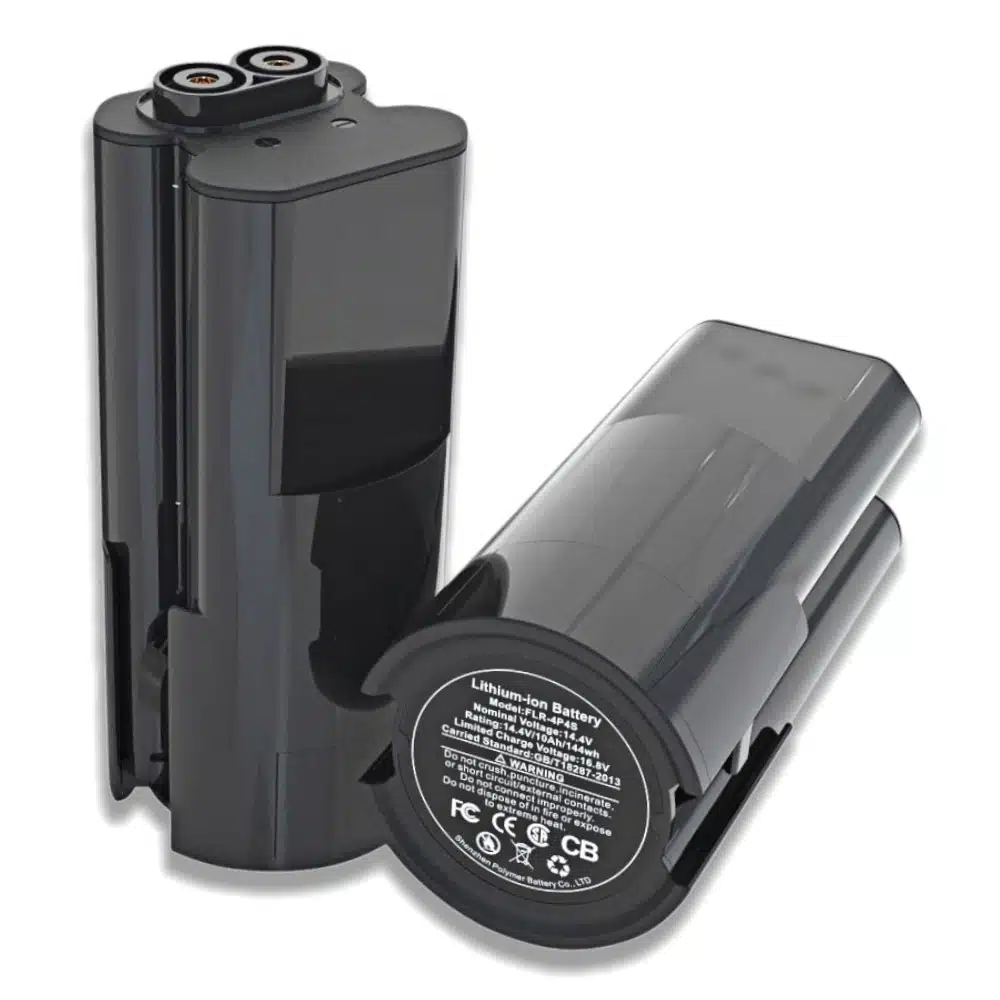
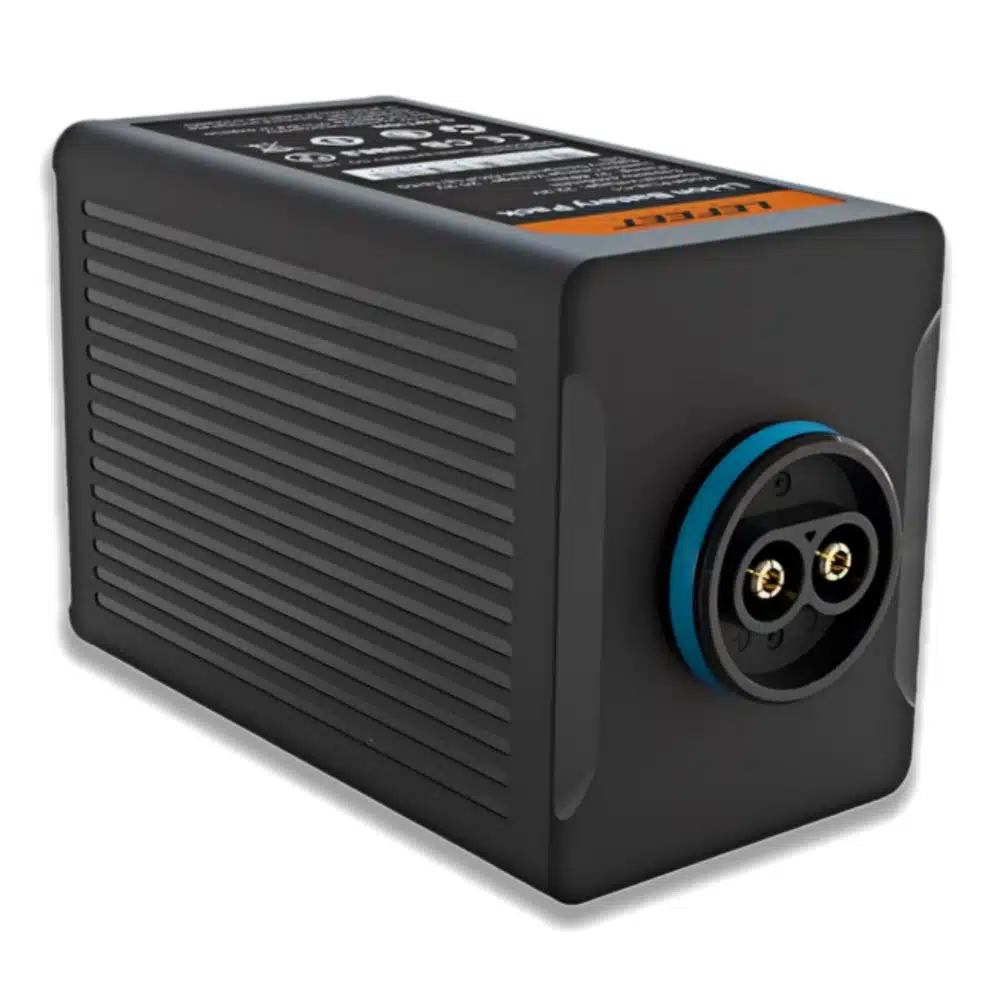
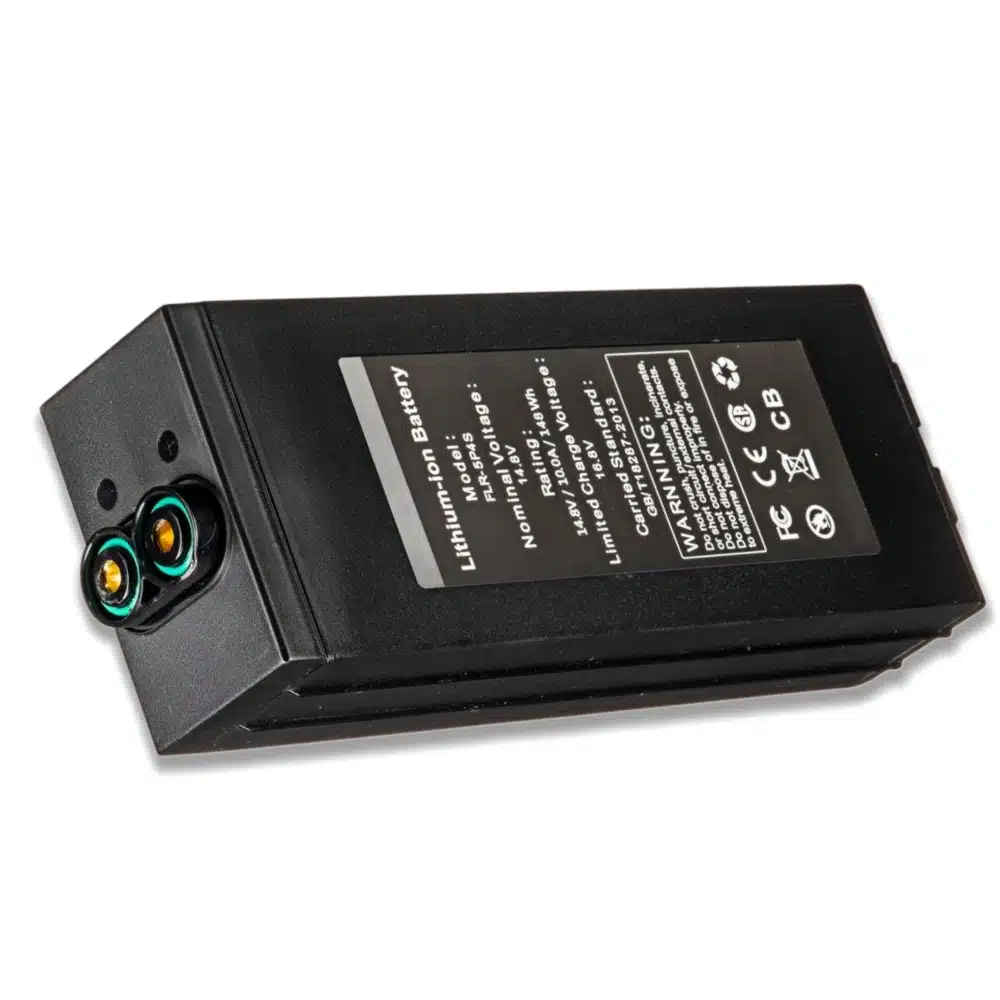
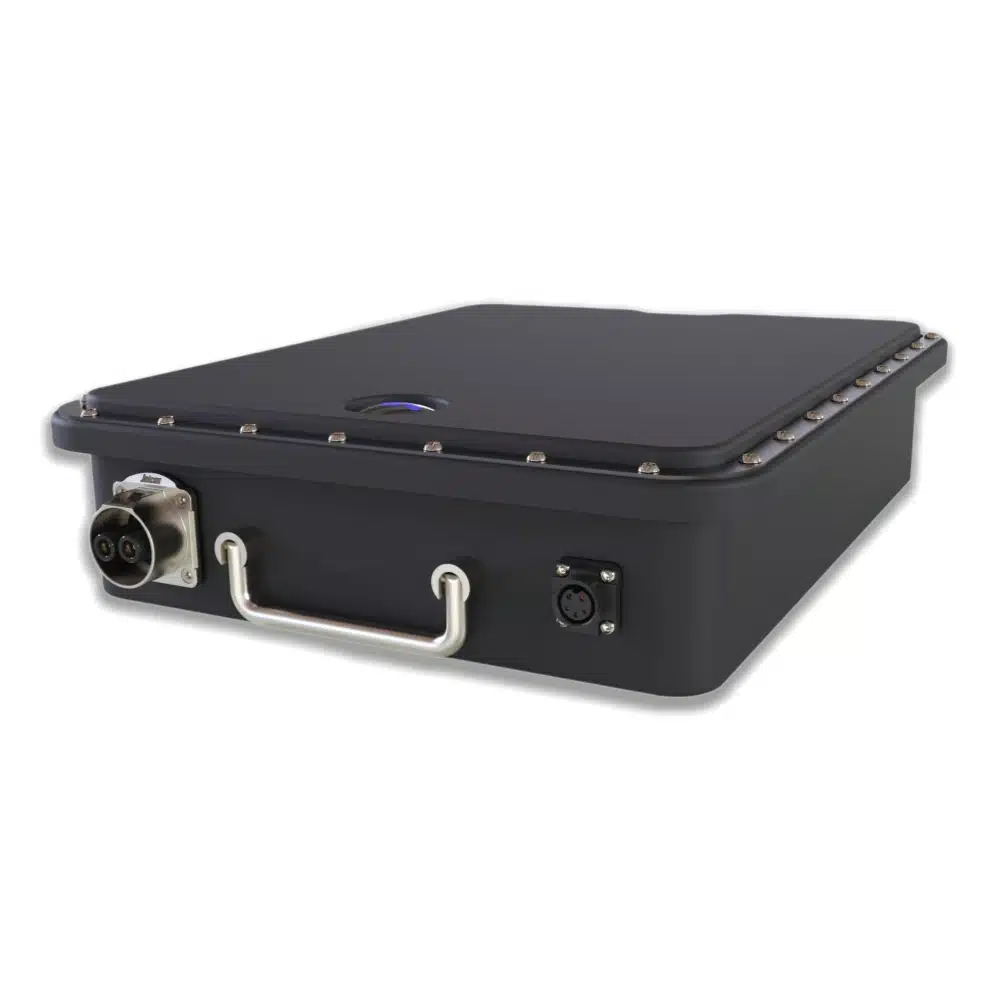
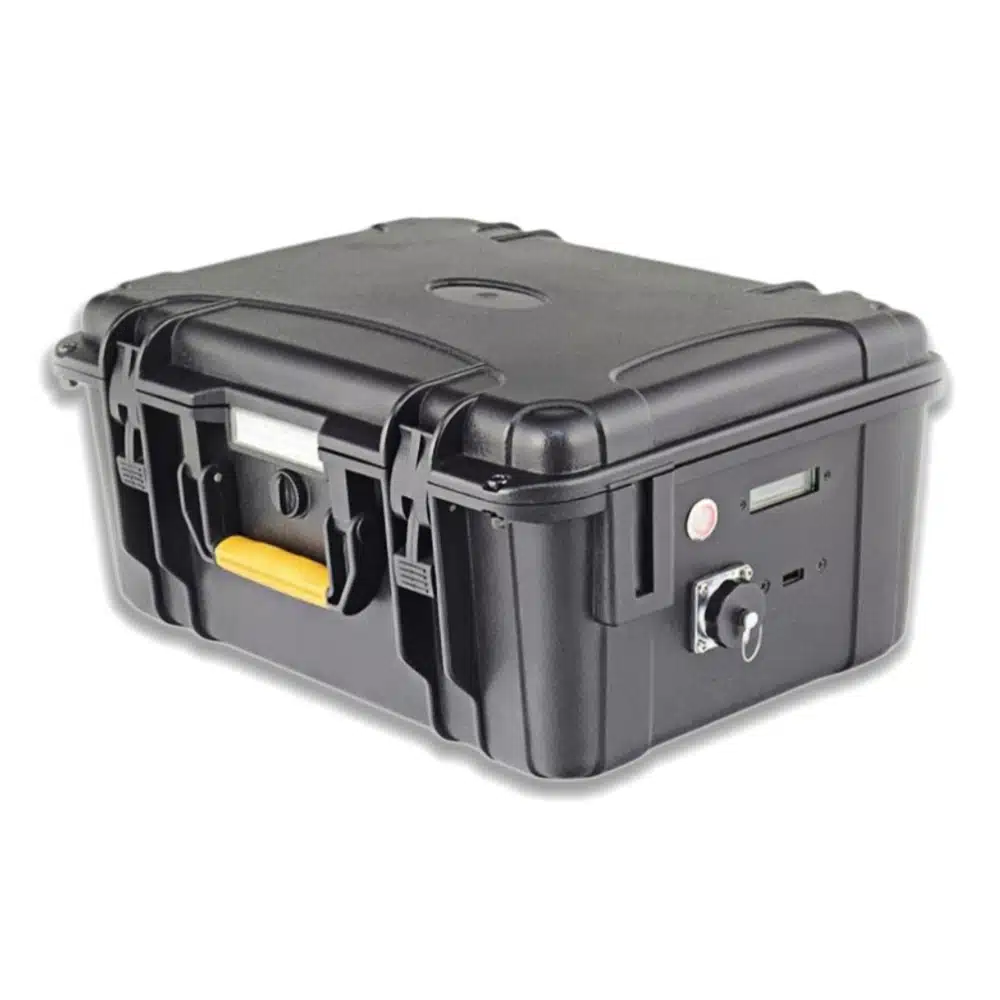
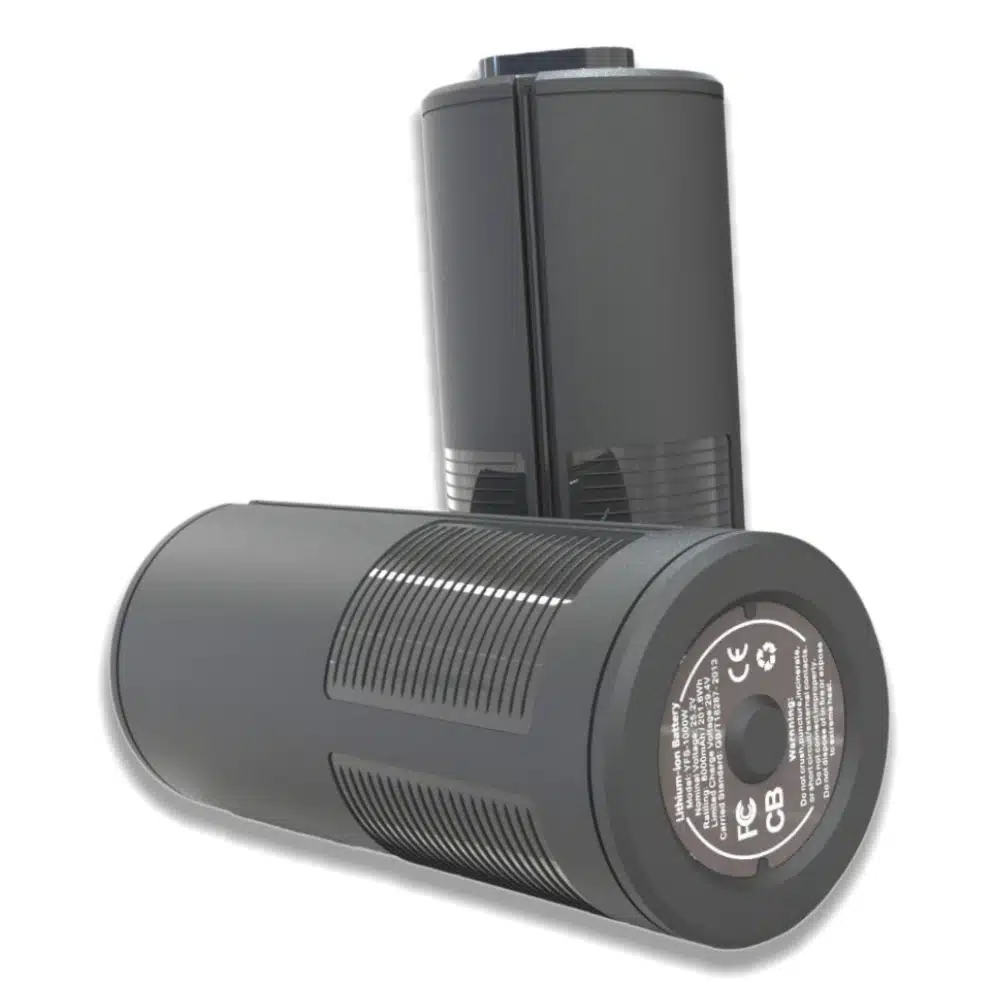
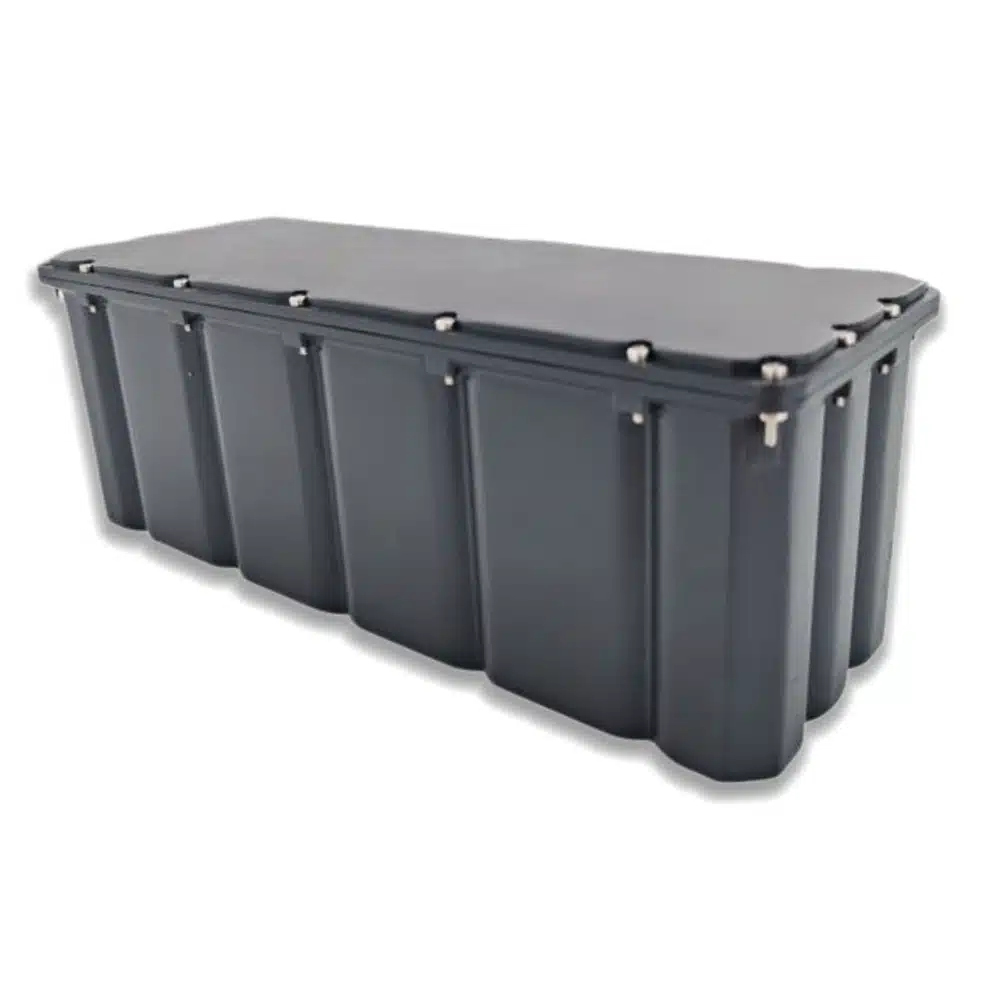
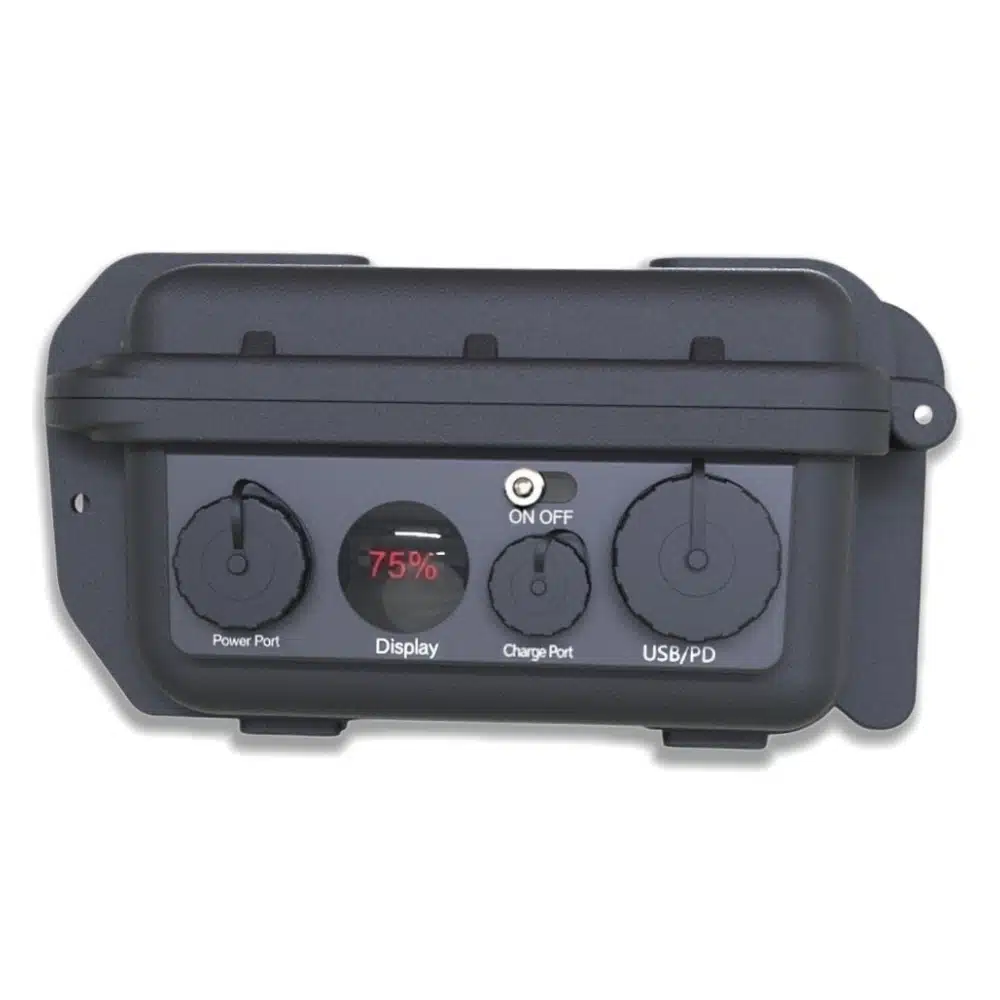
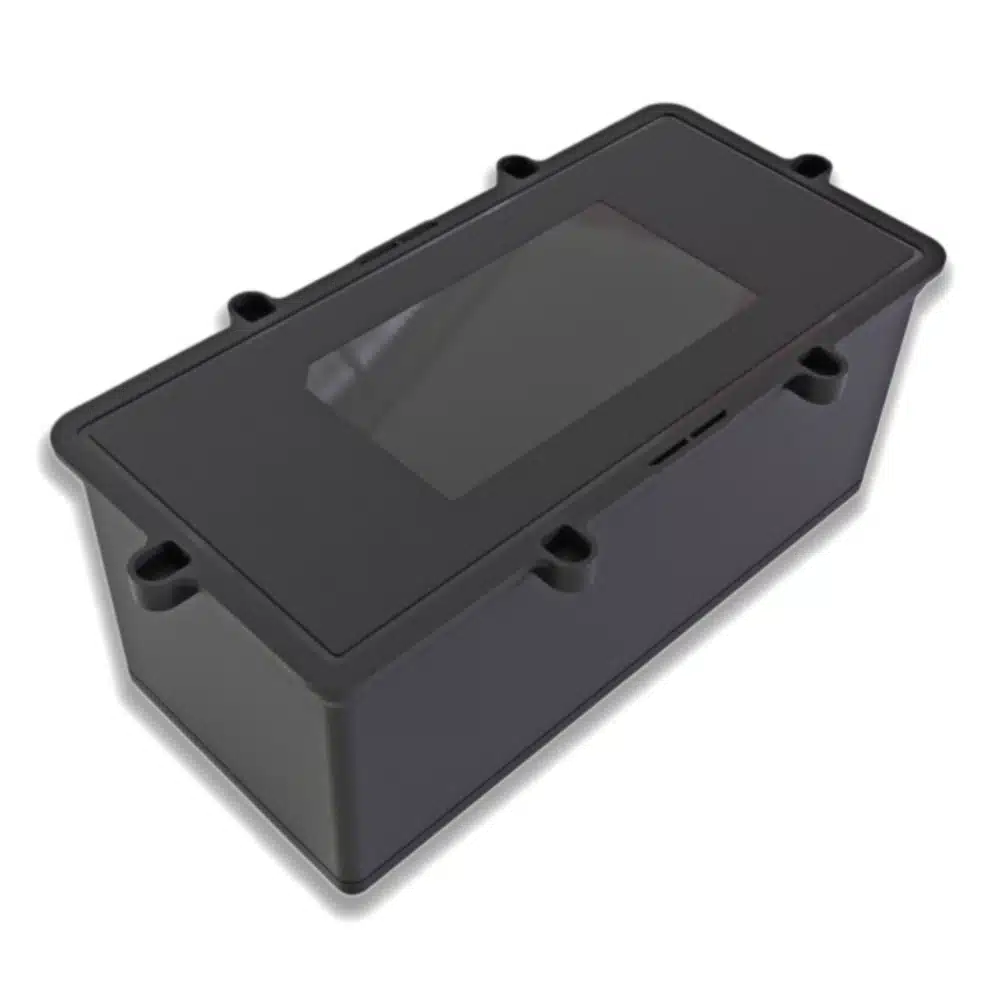
48v 100ah 5kwh underwater auv ip68 5000m factory direct battery pack (1) 48v 100ah 5kwh underwater auv ip68 5000m factory direct battery pack (4) 48v 100ah 5kwh underwater auv ip68 5000m factory direct battery pack (2) 48v 100ah 5kwh underwater auv ip68 5000m factory direct battery pack (3)

48V 100Ah 5kWh IP68 Underwater AUV Battery Pack — Depth-Rated to 5000 Meters | 200A Continuous | OEM China Supply

  • IP68 rated to 1000–5000 meters depth — pressure-rated enclosure engineered for extreme deep-water AUV and subsea robot deployment; depth specification customizable per project

  • 48V / 100Ah / 5kWh — 200A continuous discharge, sustains 10kW thruster motor operation under full mission load

  • Tesla-process cell manufacturing with cell-level FUSE — individual fusible link per cell isolates hard short-circuit faults before thermal propagation in sealed pressure housing

  • Japanese IC multi-layer BMS protection — overcharge, overdischarge, overcurrent, overtemperature, and short circuit protection as independent second tier

  • Compact, lightweight form factor; voltage, capacity, enclosure dimensions, waterproof depth rating, and connector type fully customizable for OEM/ODM programs

Описание продукта

The 48V 100Ah 5kWh IP68 underwater AUV battery pack operates at a depth envelope that eliminates the recreational and light-commercial dive equipment frame of reference entirely. Rated for continuous submersion from 1000 to 5000 meters, this pack is engineered for autonomous underwater vehicles, deep-sea inspection platforms, and subsea robotic systems where ambient pressure exceeds 100 bar and where recovery of a failed battery system is measured in days, not minutes. At 200A continuous discharge, the pack sustains 10kW motor loads across extended mission durations — the energy density and current delivery required for propulsion, payload operation, and onboard systems running simultaneously on a single battery architecture. Every production unit is individually verified through two-stage waterproof testing before shipment, with pressure log records and immersion documentation provided as standard with OEM orders.

The cell architecture applies Tesla-process manufacturing standards to each cell in the pack — a production methodology that prioritizes cell uniformity, internal resistance consistency, and dimensional tolerance at the cell level before pack assembly begins. Every cell carries an individual fusible link sized to open under hard short-circuit current at that specific cell, interrupting the fault current path before heat can transfer to adjacent cells. In a pressure-rated enclosure at 5000 meters where ambient pressure exceeds 500 bar and where no venting path exists, cell-level fault isolation is not a performance feature — it is a fundamental safety architecture requirement. The Japanese-brand IC BMS operates as an independent second protection tier across all normal fault conditions.

OEM and ODM customization covers voltage, capacity, declared waterproof depth across the 1000–5000 meter range, enclosure outer dimensions, connector type, and BMS communication protocol. The compact, lightweight design minimizes the buoyancy and weight budget consumed by the power system within the AUV or robot chassis. Factory documentation includes IP68 pressure log records, immersion test photographs, and UN38.3 transport compliance certificates structured for downstream regulatory and certification submissions.

Технические параметры

Параметр Спецификация
Модель батареи 48V-100AH-5KWH-AUV-IP68-5000M
Напряжение 48V (nominal)
Емкость 100 Ач
Энергия 5 кВт·ч
Химия клеток Li-ion (Tesla-process manufacturing)
Конфигурация ячейки Per design (customizable series/parallel configuration)
Continuous Discharge Current 200А
Supported Motor Load 10kW continuous
Степень защиты IP IP68
Declared Waterproof Depth 1000–5000 meters (per project specification)
Declared Submersion Duration Per project specification (customizable)
Материал корпуса Aluminum alloy (anodized) / Titanium (available for extreme depth)
Sealing Method Precision O-ring + epoxy potting (dual-barrier, depth-pressure rated)
Cell Protection Cell-level FUSE — individual fusible link per cell for hard short-circuit isolation
Защита BMS Japanese brand IC — overcharge / overdischarge / overcurrent / overtemperature / short circuit
Тип разъема Subsea-rated waterproof connector (customizable — SubConn, Cobalt, custom)
BMS Protocol UART / RS485 / CAN Bus / SMBus (configurable)
Рабочая температура от -20°C до +60°C
Form Factor Compact, lightweight — dimensions customizable per chassis specification
Состояние New — factory-produced to declared specification
Срок службы цикла 500+ cycles at standard discharge conditions
Сертификаты UN38.3 (standard); CE / RoHS available
Гарантия 12 месяцев
В комплект входит 1× battery pack + IP68 pressure test documentation package
Compatible Applications Underwater AUVs, subsea inspection robots, deep-sea ROVs, underwater robotic systems
OEM/ODM Voltage, capacity, depth rating, enclosure dimensions, connector, BMS protocol — all customizable
Тип поставки OEM factory-direct supply; volume replenishment supported

Особенности и преимущества

✅ 🌊 Pressure-Rated Enclosure From 1000 to 5000 Meters — Customized to Mission Depth

At 5000 meters, ambient water pressure reaches approximately 500 bar — a mechanical load that destroys standard IP68 enclosures designed for recreational depth ratings. The enclosure architecture for this pack is engineered for pressure-rated deep-water deployment: precision-machined aluminum alloy or titanium housing options, O-ring groove geometry calculated for the compression force required at target depth rather than at surface-equivalent conditions, and epoxy potting on all internal compartments as a pressure-tolerant secondary barrier. Declared depth is not a fixed product specification — it is a project parameter. Submit your mission depth profile and we configure the enclosure, sealing compound selection, and housing wall thickness to the pressure conditions of your specific deployment environment, from 1000 meters to 5000 meters.


✅ 🔋 Tesla-Process Cell Manufacturing With Cell-Level FUSE Architecture

Tesla-process cell production applies the manufacturing discipline developed for high-volume EV cell production to each individual cell in this pack: tight tolerance control on electrode coating thickness, electrolyte fill volume, and formation cycling protocol, resulting in cell-to-cell internal resistance variation that is significantly lower than standard industrial cell production batches. Lower cell-to-cell resistance variation means parallel cell strings carry balanced current under the 200A discharge load — preventing the current imbalance that concentrates heat in high-resistance cells and accelerates capacity fade in high-drain applications. The individual cell-level FUSE — a fusible link in each cell’s interconnect conductor — provides hard short-circuit isolation at the cell before BMS response time becomes relevant. In a sealed, pressure-rated enclosure at depth, this architecture is the difference between a contained fault and an unrecoverable mission failure.


✅ ⚡ 200A Continuous Discharge for 10kW Motor and Multi-System Mission Architecture

AUV and subsea robot missions do not run a single load — propulsion motors, acoustic positioning systems, camera and lighting payloads, manipulator arms, and onboard computing draw simultaneously from the battery architecture. The 200A continuous rating on this pack is the combined system budget, not the motor-only figure. At 48V nominal, 200A delivers 9.6kW of sustained power across the full mission load profile, with the 5kWh total energy providing mission duration at realistic combined power draw. Cell matching at production uses internal resistance grading to ensure balanced current sharing across parallel cell strings under multi-system simultaneous load — a requirement that becomes critical when propulsion spikes are overlaid on steady-state payload consumption.

Упаковка и доставка

UN38.3 wooden box packing for safe custom lithium battery pack transport.webp

Надежная и соответствующая стандартам упаковка

Для обеспечения безопасной транспортировки опасных грузов класса 9 каждая батарея защищена специальным составом. Высококачественная пенополиэтиленовая вата (EPE Foam) и заключенный в картонные коробки, сертифицированные ООН. Для оптовых поставок мы используем прочные материалы. Фанера или пластиковые поддоны Упаковано в термоусадочную пленку, полностью соответствует международным правилам транспортировки.

Варианты международной доставки (Инкотермс)

Мы предлагаем гибкие условия доставки, соответствующие потребностям вашего бизнеса, включая: Условия поставки: FOB, CIF и DDP (доставка от двери до двери, включая налоги)..

  • По морю: Наиболее экономичный вариант для оптовых заказов.
  • Авиа/экспресс-доставка: Быстрая доставка образцов (DHL/UPS/FedEx).
  • По железной дороге: Надежная служба экспресс-доставки CR Express на рынки Европы и Центральной Азии.

Сроки выполнения производственного заказа

Сроки выполнения заказа варьируются в зависимости от индивидуальных особенностей продукта:

Тип продукта Образцы Оптовый заказ
Стандартные модели 5-7 дней 14-20 дней
Индивидуальные модели 7–14 дней 14–28 дней

Глобальные стандарты безопасности и соответствие требованиям производителей оригинального оборудования.

При интеграции изготовленного на заказ литий-ионного аккумуляторного блока в ваше устройство соблюдение нормативных требований является обязательным. В Balder Power наши OEM-решения для аккумуляторных батарей разрабатываются с нуля и проходят строгие международные испытания на безопасность. Мы гарантируем, что ваши изготовленные на заказ блоки соответствуют стандартам CE, UL и IEC, а также предоставляем обязательные отчеты UN38.3 и MSDS, необходимые для бесперебойной международной доставки. От первоначального прототипирования до окончательной сертификации мы устраняем препятствия на пути к соблюдению нормативных требований, чтобы ускорить выход вашего продукта на рынок.

Часто задаваемые вопросы

Q1: How is a 5000-meter depth rating achieved, and what enclosure architecture makes this possible at 500 bar ambient pressure?

Standard recreational IP68 enclosures are designed and tested at depths of 1 to 100 meters — ambient pressures of 0.1 to 10 bar. At 5000 meters, ambient pressure reaches approximately 500 bar, a mechanical load that requires a fundamentally different enclosure engineering approach. The primary variables are housing wall thickness and material yield strength, O-ring groove geometry calculated for the compression force required to maintain seal integrity at 500 bar rather than at surface-equivalent conditions, and the selection of sealing compounds that maintain elastic properties under extreme pressure rather than experiencing compression-set failure. Epoxy potting on internal compartments provides a pressure-tolerant secondary barrier that remains effective at depth regardless of housing deformation under load. The declared depth for each OEM program is a project input — we configure wall thickness, material specification, and sealing architecture to the pressure profile of your specific deployment depth. Submit your mission depth and we return the engineering specification with the proposal.


Q2: What does “Tesla-process cell manufacturing” mean in practice, and how does it affect performance at 200A continuous discharge?

Tesla-process manufacturing refers to the production discipline developed for high-volume EV cell manufacturing, applied here to each cell in this pack. The defining characteristics are tight tolerance control on electrode coating uniformity, electrolyte fill volume precision, and controlled formation cycling — the initial charge-discharge sequence that establishes the SEI layer on the anode and determines the cell’s long-term capacity retention behavior. The practical output is cell-to-cell internal resistance uniformity significantly tighter than standard industrial cell production. At 200A continuous discharge across a parallel cell string, internal resistance variation between cells directly determines current distribution — high-resistance cells carry less current and are bypassed by lower-resistance neighbors, creating localized thermal concentration that accelerates degradation in the cells absorbing the imbalanced load. Tighter resistance matching at the cell production level, before pack assembly, reduces this imbalance at the source rather than relying on the BMS to compensate for it.


Q3: What depth range is available for OEM customization, and what is the minimum order quantity?

The customizable depth range for this pack covers 1000 to 5000 meters. Depth specification is a project input that drives enclosure wall thickness, material selection, O-ring groove geometry, and sealing compound specification — parameters that are determined at the engineering proposal stage rather than selected from a fixed menu. Prototype validation orders using existing enclosure tooling proceed at 10 to 20 units. Projects requiring new enclosure tooling for a non-standard chassis geometry involve a tooling cost and lead time discussion at the proposal stage. Full OEM customization covers voltage, capacity, declared depth and submersion duration, enclosure outer dimensions, connector type and pin assignment, and BMS communication protocol. Submit your mission depth profile, vehicle chassis dimensions, and power system specification and we return a technical proposal within 48 hours.


Q4: How does the BMS communicate with the AUV control system, and what telemetry data is available?

The BMS on this pack supports configurable communication protocols — UART, RS485, CAN Bus, and SMBus — to match the communication architecture of the target AUV or robotic platform. Available telemetry output includes pack voltage, cell-level voltage, state of charge estimate, discharge current, pack temperature, and fault status flags. The specific data frame format, baud rate, and protocol variant are configured to match your vehicle’s power management system at the OEM program setup stage. For AUV programs with existing battery management integration, provide the BMS communication specification from your vehicle documentation and we configure the pack firmware to output a compatible data stream. For new vehicle designs, we can advise on protocol selection based on your control system architecture.


Q5: What is the weight and dimensional envelope of this pack, and how is buoyancy managed in an AUV chassis?

Exact dimensions and weight depend on the final enclosure specification — wall thickness varies with declared depth rating, and cell configuration determines internal volume. As a reference, a 48V 100Ah 5kWh Li-ion pack in an aluminum alloy enclosure rated to 1000 meters typically falls in the 18–25kg range depending on cell type and configuration; titanium enclosure options for deeper ratings add material weight against the depth performance gain. Buoyancy contribution is determined by the ratio of pack mass to displaced water volume — for AUV integration, we can provide the enclosure displacement volume alongside the mass figure so your vehicle design team can calculate the net buoyancy effect within the chassis. If your vehicle design requires a specific neutral buoyancy target, specify this at inquiry stage and we can discuss enclosure material and geometry options that move the pack toward the target buoyancy profile.


Q6: What certifications and export documentation are available for research institution and government procurement programs?

UN38.3 transport certification is included as standard and covers all required lithium battery testing for IATA, IMDG, and ADR/RID freight classification. CE certification under the Low Voltage Directive and EU Battery Regulation is available for European market procurement. RoHS compliance documentation is available for restricted substance declarations. For research institution and government procurement programs that require additional documentation — material declarations, country of origin certificates, test reports for specific safety standards, or documentation formatted for institutional procurement compliance — these can be discussed at the proposal stage. We provide full test documentation packages structured for inclusion in procurement technical files and downstream regulatory submissions. For programs with specific national security or dual-use export control considerations, buyers should verify applicable export control classifications for high-capacity lithium battery systems in their jurisdiction before completing procurement.


Сопутствующие товары

Прокрутить вверх
Свяжитесь с нами
Для получения поддержки или по любым вопросам:

Электронная почта: [email protected];


[email protected]

Телефон/WhatsApp/WeChat:


+86 13712040916

Хань, Китай

3-й этаж, корпус 1, III фаза, Международный центр предпринимательства, проспект Гуангу, технологическая зона Ист-Лейк, город Ухань, провинция Хубэй, Китай